
The Canyon Ferry
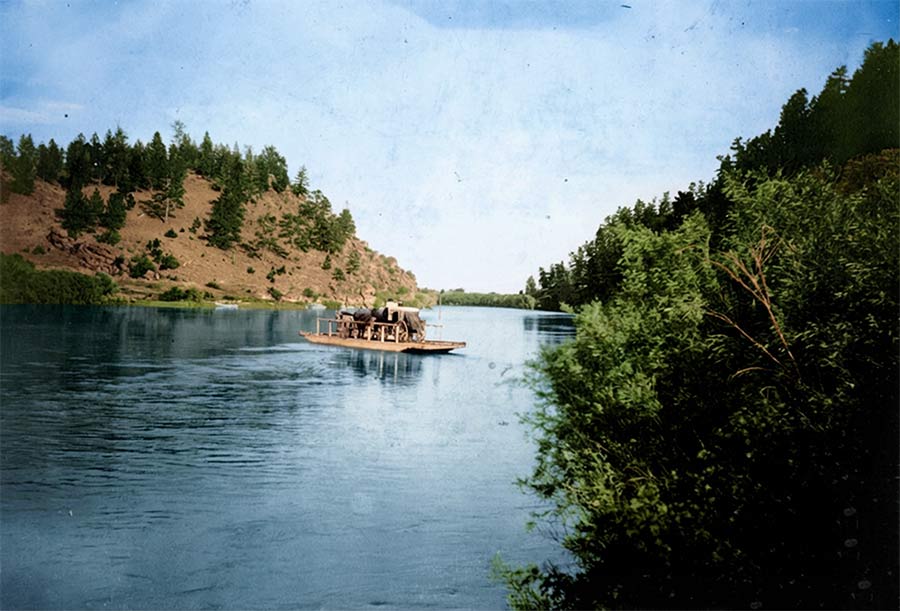

(Click on these photos to view full screen!)
Driving around the greater Helena/East Helena area, the name Canyon Ferry pops up everywhere. These (SCROLL DOWN)
are reminders that there was an actual “Canyon ferry” that crossed the Missouri River near a
settlement established in early 1865 by a man named John Oaks.
Miners from Confederate, Magpie and Cave gulches often came to this point to cross the Missouri,
and rowing across the river was hard work. A flat open boat was soon strung across the river in the
spot where the first dam was built some 30 years later. The charge for being pulled across was 25
cents for a horse and rider and 50 cents for a team of horses or oxen.
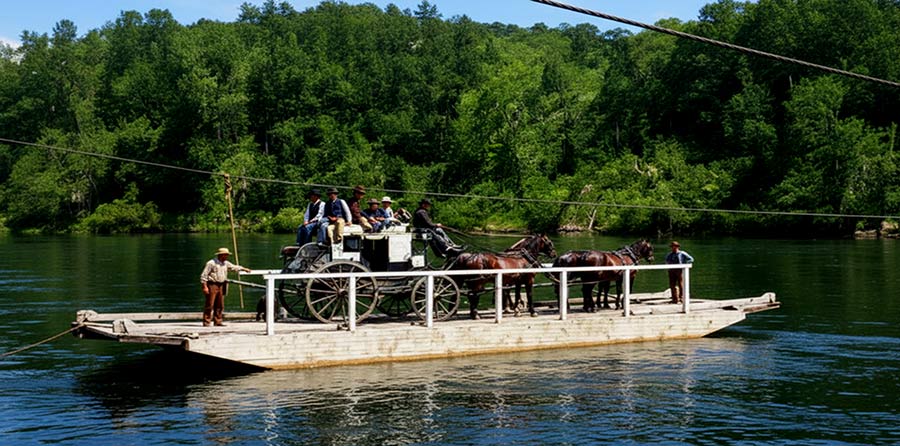
Anchored by cables, the heavy barge was driven across the Missouri by the river current. This is
known as a reaction ferry, which uses the current against a fixed tether to propel the vessel. This
one operated using an overhead cable suspended from towers anchored on both banks.
On such ferries, a “traveller” is usually installed on the cable and the ferry is attached to the
traveller by a bridle cable. To operate the ferry, either the bridle cable is adjusted or a rudder
is used, causing the ferry to be angled into the current, which drives the boat across the river.
In 1866, Captain J. V. Stafford bought out the ferryboat interest and built a hotel and store
there. He soon sold to Court Sheriff, who operated a general mercantile shop just to the east, in
Cavetown. Sheriff opened a livery stable and hotel, firmly establishing the settlement that became
known as Canyon Ferry.
For some 50 years, the Sheriff family operated a stagecoach between White Sulphur Springs and
Helena. Canyon Ferry was a meal station midway along the trip. But in 1898, the completion of the
first dam at that point left the waters below the dam too choppy for safe crossing, signaling the
death of the ferry. Those wishing to cross once again made the passage in rowboats until the first
county bridge was built the next year, in 1899.
Ever since, Canyon Ferry has been primarily a place-name rather than a means of river transport. As
a result, few residents, and even fewer new arrivals, are aware of the key role it played in the
region’s early development.”
